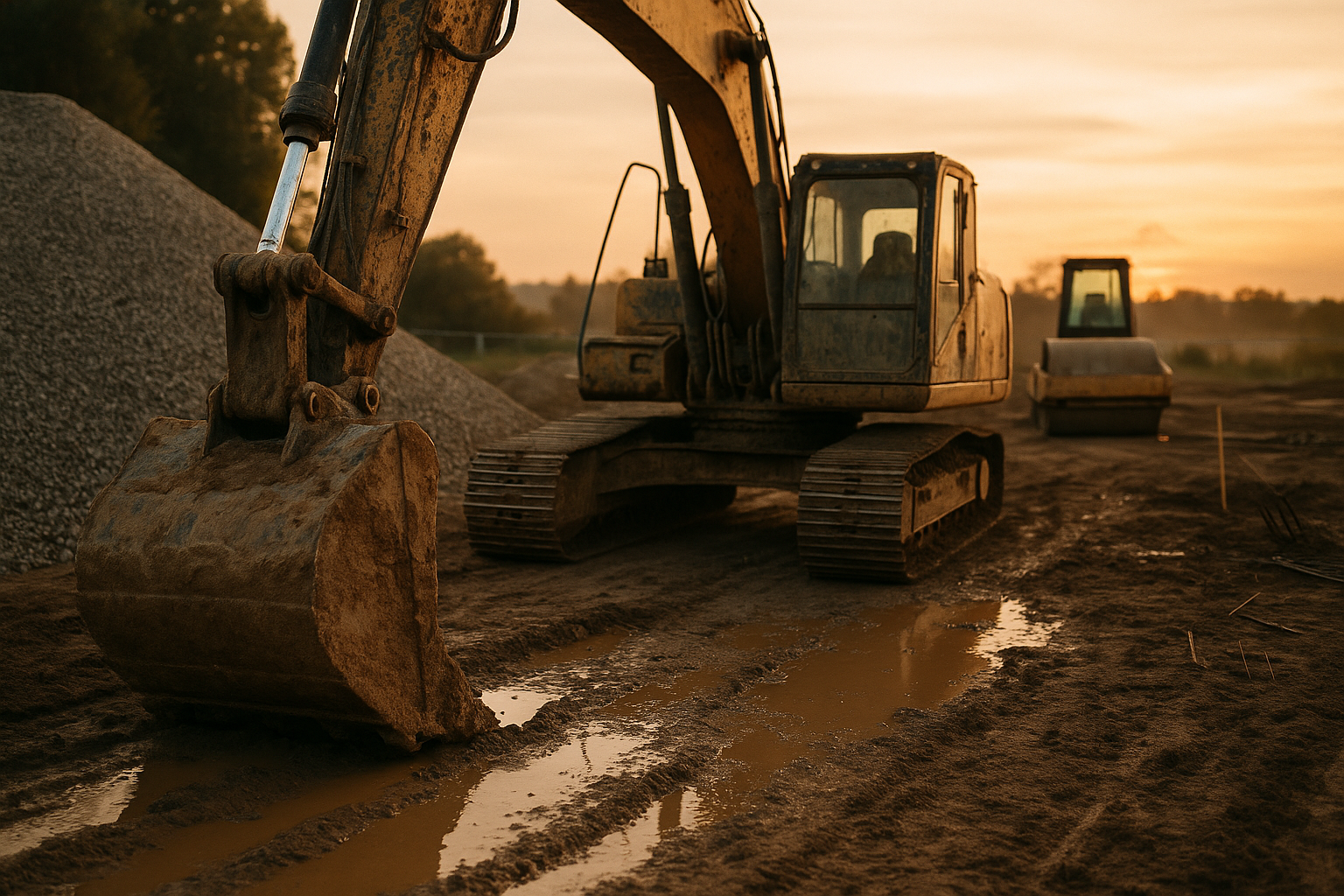
Construction Machinery: Types, Uses, Safety, and Emerging Technologies
Outline:
– Purpose and scope of construction machinery in modern projects
– Key categories, functions, and selection considerations
– Role of equipment across the project lifecycle and delivery models
– Safety, risk management, and daily operational discipline
– Emerging technologies, sustainability, and investment roadmaps
Understanding Construction Machinery and Its Applications
From the first bucket that bites into the soil to the final pass of a roller, construction machinery turns drawings into tangible assets. At its core, the field covers earthmoving, lifting, hauling, roadmaking, and concrete handling, plus the power and support equipment that keep sites productive. Machines multiply human capability: a single excavator can replace multiple crews with shovels, a compactor transforms loose fill into engineered ground, and a crane lifts structural elements into precise alignment. In short, machinery is the backbone of schedule control, cost management, and quality assurance on today’s job sites.
Understanding Construction Machinery and Its Applications starts with mapping tasks to capabilities. Earthmoving equipment shapes the terrain; cranage and material handlers assemble and position components; paving and compaction gear produce durable road surfaces; concrete mixers and pumps deliver consistent placement; and specialized attachments extend a machine’s reach to demolition, landscaping, utilities, and more. Attachments matter: a hydraulic hammer turns an excavator into a breaker; a tilt-rotator adds precise articulation; an auger enables rapid piling for fences and small foundations; a grapple manages demolition debris efficiently.
Applications span every sector—residential, commercial, industrial, and civil infrastructure. The same family of machines adapts to wildly different contexts by changing size, configuration, and tooling. Tracked undercarriages lower ground pressure for soft soils; wheeled options favor speed on firm ground; noise-reduction kits and compact formats suit dense urban sites; dust control and high-flotation tires support remote or environmentally sensitive areas. Right-sizing is crucial: overspecifying adds fuel, transport, and rental cost; underspecifying invites delays and rework.
Typical task-to-machine matches include:
– Site clearing and grading: dozers, compact track loaders with brush or grading attachments
– Trenching and foundations: excavators with buckets, thumbs, and trenching tools
– Mass hauling: articulated dump trucks matched to excavator cycle times
– Structural lifting: mobile or tower cranes sized to radius and load charts
– Concrete placement: truck mixers feeding stationary or boom pumps
– Surface finishing: graders, smooth-drum or padfoot rollers, and brooms
Successful deployment blends equipment capability with operator skill, logistics, and maintenance. Think in systems: the best results come from balanced fleets where loader capacity, truck payload, and haul distance complement each other, minimizing idle time and bottlenecks. This systems view underpins safe, productive, and predictable project delivery.
An Overview of Common Types of Construction Equipment
Construction equipment can be grouped by function, but the nuances inside each category matter for productivity and cost. Excavators, the Swiss Army knives of earthmoving, come in compact, midsize, and large formats. Tracked models excel in traction and low ground pressure, while wheeled versions move faster on paved surfaces. Zero-tail-swing designs help in tight urban jobs, and quick couplers make switching from bucket to hammer or tilt-rotator a two-minute task rather than a half-hour ordeal.
Loaders also vary widely. Wheel loaders move aggregates and feed crushers or hoppers, prized for durability and breakout force. Compact track loaders and skid-steers shine in confined spaces, pairing with grading boxes, trenchers, or sweepers. Backhoe loaders straddle excavation and loading, fitting small municipal or utility jobs where one machine must do many tasks. Dozers provide rough grading power with blades tailored to material behavior—straight blades for precision, semi-U for general purpose, and U-blades for pushing bulky loads. Rippers at the rear help in hardpan or frozen ground.
Graders deliver millimeter-level control over final surfaces, essential for roadbeds and large slabs. Compactors include smooth-drum rollers for granular soils and asphalt, padfoot rollers for cohesive soils, and pneumatic tire rollers for kneading effect on asphalt mats. In lifting, mobile cranes provide flexible reach for varied sites, tower cranes dominate high-rise work with efficient coverage, and telehandlers blend forklift convenience with boom reach to position pallets or light components at height.
Hauling options range from on-road dump trucks for short, paved moves to off-highway trucks designed for heavy loads over rough terrain. On the paving side, asphalt pavers lay uniform mats fed by material transfer vehicles, while milling machines remove existing surfaces to precise depths for rehabilitation. Concrete operations rely on truck mixers, batching equipment, and pumps for consistent delivery; internal and surface vibrators improve consolidation and finish quality.
Choosing among these types comes down to matching capability to constraints:
– Material: cohesive clay vs granular sand vs asphalt or reinforced concrete
– Terrain: soft ground, steep grades, or tight urban alleys
– Access: transport limits, overhead obstructions, or noise and emission rules
– Production targets: required cycles per hour, smoothness specs, or pour rates
– Support: service access, parts availability, and operator familiarity
An Overview of Common Types of Construction Equipment reveals a universe where configuration details—undercarriage, attachments, control systems—drive real-world outcomes. Thoughtful selection sets the stage for reliable performance and controlled costs.
How Construction Machinery Supports Building and Infrastructure Projects
Projects move through phases—survey, site preparation, foundations, structure, services, and finishes—and machinery is the catalyst at each step. Survey-grade drones and scanners (often integrated through digital models) accelerate planning, but it is the iron on the ground that converts plans into progress. Scrapers and dozers cut and fill; excavators trench for utilities; cranes lift steel, precast, or facade units; pavers and rollers craft road surfaces; and pumps ensure concrete is placed on time, at the right slump, and with consistent consolidation.
How Construction Machinery Supports Building and Infrastructure Projects is best seen through the lens of flow. A balanced fleet reduces waiting: an excavator sized to load a truck in three to five passes aligns with efficient cycle times, while haul routes designed with safe turning radii and minimal grade changes keep production steady. On vertical construction, crane planning around hook time, lift radius, and wind exposure governs structural pace. For urban work, compact equipment, night deliveries, and noise shields maintain community goodwill and regulatory compliance.
Infrastructure adds its own tempo. Highway resurfacings often run under lane-closure windows measured in hours, so paver speed, roller patterns, and material temperature management determine acceptance. On bridges, lifting operations hinge on clear load paths and precise rigging. In utilities, shoring systems paired with excavators protect trenches and crews, while vacuum excavators may be deployed around congested subsurface corridors to reduce strike risk. Across all contexts, logistics—fueling, charging (for electrified fleets), lubrication, and spare parts staging—underpin reliability.
Practical benefits show up as reduced rework, tighter tolerances, and safer tasks. Even modest upgrades—grading control, machine telematics, or improved operator visibility—can stabilize schedules and lower total cost of ownership by trimming idle time and smoothing utilization. Consider these levers:
– Productivity: coordinated fleets and optimized haul cycles
– Quality: precise grading and consistent compaction densities
– Safety: separation of people and machines, spotters, and clear signage
– Sustainability: lower fuel burn, right-sized equipment, and cleaner powertrains
– Cost control: preventative maintenance and data-informed rental vs purchase decisions
Ultimately, machinery is a project’s tempo-setter. When equipment selection, sequencing, and support align with design intent and site conditions, milestones become achievable, inspections pass on the first attempt, and the handover arrives with fewer surprises.
Key Safety and Operational Considerations in Using Construction Machinery
Safety is not a poster on a wall; it is a practice embedded in every start-up, travel path, lift plan, and shutdown. Key Safety and Operational Considerations in Using Construction Machinery begin with competent operators and clear site rules. A daily walk-around catches issues before they cascade—loose lugs, hose abrasion, cracked mirrors, low fluid levels, worn tires or tracks, compromised guarding. Tires and tracks determine stability; ground conditions and slopes must be assessed before moving, swinging, or lifting.
Visibility, communication, and exclusion zones are central. Machines have blind spots, and reversing, slewing, or articulation can place people at risk. Use dedicated spotters and standardized hand signals, keep pedestrians outside swing radii and travel paths, and maintain lighting and reflective signage for low-visibility operations. Load charts, rigging angles, and wind limits must be respected for any lift. Attachments require correct pinning and locking; quick couplers should be tested after every changeover to avoid accidental releases.
Think in layers of protection:
– Eliminate or substitute hazards where feasible (prefab elements reduce high-risk tasks)
– Engineering controls (barriers, interlocks, proximity detection)
– Administrative controls (traffic plans, permits to work, lift plans)
– Personal protective equipment (helmets, high-visibility garments, gloves, hearing protection)
Operational discipline extends to travel and parking on slopes, securing parked equipment with attachments lowered, and maintaining safe distances from overhead lines and buried utilities. Weather matters: rain reduces traction, heat affects tire pressure and operator fatigue, and wind can push loads off balance. Refueling and charging zones should be ventilated and clearly separated from hot works.
Maintenance is safety’s silent partner. Follow manufacturer-recommended intervals, torque checks, filtration schedules, and hydraulic inspections. Oil sampling and vibration monitoring support early detection of wear. Telematics can alert on overheat, over-revving, or shock loads, prompting timely interventions. Documented servicing builds compliance and resale value, and clean cabs with intact seat belts and rollover protection safeguard operators during the unexpected. Culture closes the loop: near-miss reporting, toolbox talks, and transparent incident learning help teams avoid repeat mistakes and keep people and assets protected.
Trends and Technological Developments in Construction Machinery
The industry is shifting toward smarter, cleaner, and more connected fleets. Trends and Technological Developments in Construction Machinery include electrification, hybridization, advanced controls, and data-driven maintenance. Battery-electric compact machines reduce local emissions and noise—valuable for interior work, hospitals, and dense neighborhoods—while hybrids capture and redeploy energy in duty cycles with frequent starts and stops. Alternative fuels and improved aftertreatment further cut pollutants and align with environmental targets.
Precision technologies are moving from specialist to standard. Machine control guided by satellite positioning or local base stations helps excavators, dozers, and graders hit design elevations without repetitive staking, trimming rework and material overrun. Digital workflows connect models to machines, so as-built data can flow back to the design team. Collision avoidance and 360-degree vision systems enhance situational awareness. Remote operation and semi-autonomous functions are expanding into repetitive tasks such as haul routes or fine grading, supporting productivity and creating distance from hazardous zones.
Connectivity reshapes maintenance and asset management. Telematics provide hour counts, fault codes, fuel or energy consumption, and geofencing, allowing managers to schedule preventative maintenance, right-size fleets, and reduce idle time. Predictive analytics—built on sensor data for temperature, vibration, and pressure—help forecast component wear and plan repairs during natural lulls. Cybersecurity enters the picture as machines become nodes on a network; secure credentialing, segmented networks, and regular updates are now part of fleet stewardship.
Adoption is a journey, not a leap. A practical roadmap might include:
– Pilot projects for grade control on a single dozer or excavator
– Telematics on critical assets to baseline utilization and idle trends
– Electrified compact units where charging access and duty cycles align
– Training that blends operator skill with digital literacy
– Supplier partnerships for charging, data integration, and support
The payoff shows up in steadier schedules, fewer surprises, and lower lifetime costs. Crucially, these tools do not replace craft; they amplify it, helping crews deliver predictable, high-quality outcomes while meeting tightening environmental and community expectations.
Conclusion: Turning Capability into Certainty
Construction machinery is more than a collection of iron and hydraulics—it is a strategy for turning risk into reliable progress. By aligning tasks with the right equipment, enforcing disciplined safety practices, and investing in technologies that fit your workflows, contractors, project owners, and fleet managers can deliver projects that are efficient, compliant, and resilient to change. Start with clear goals, measure what matters, and let well-chosen machines carry the load.


